
The pharmaceutical sales landscape has evolved dramatically over the past decade. Traditional territory planning methods—relying on historical data and gut instinct—are no longer sufficient in today's data-driven market environment.
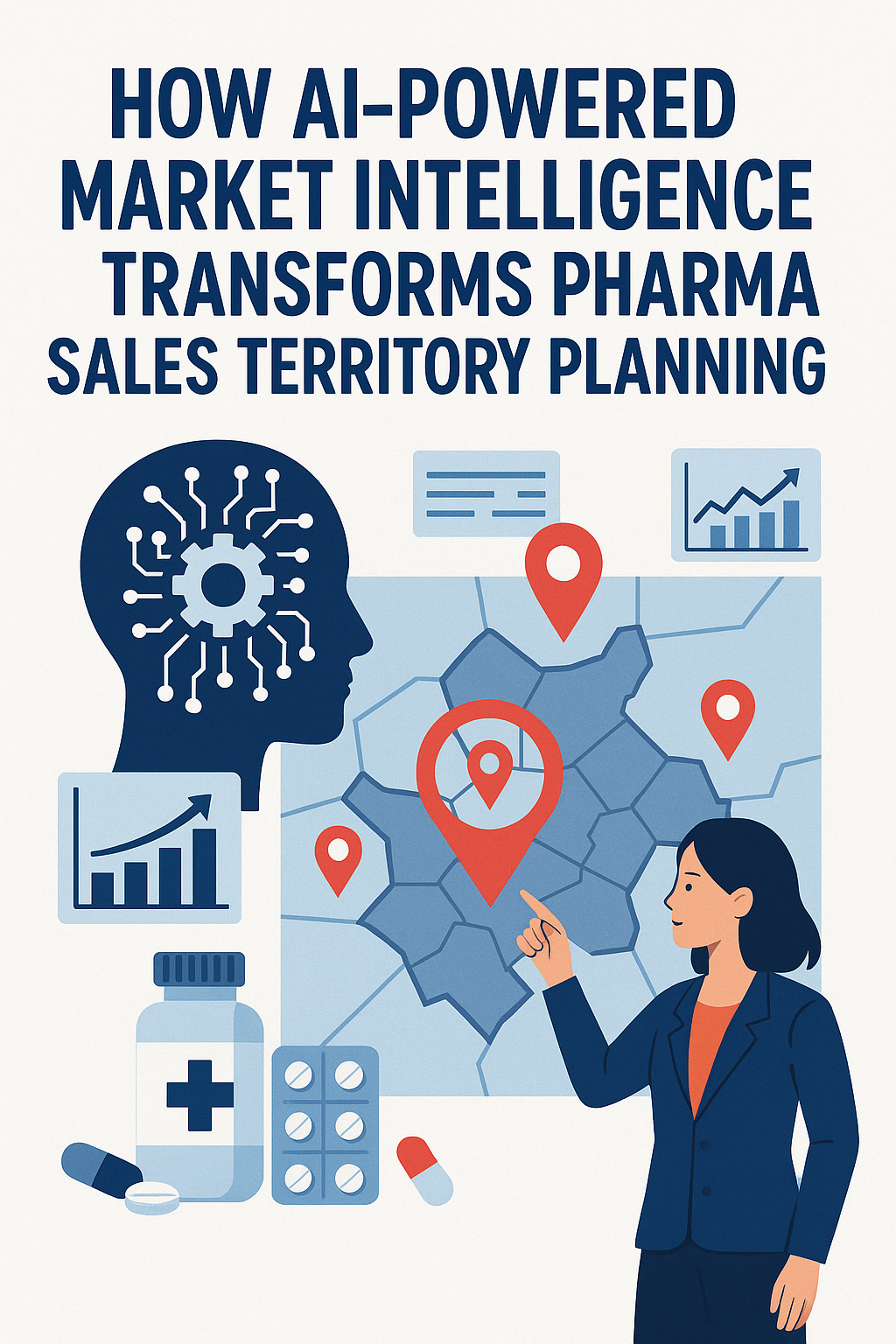
Leading pharmaceutical companies are now turning to AI-powered market intelligence platforms to revolutionize their sales territory planning. These sophisticated systems analyze vast datasets including physician prescribing patterns, patient demographics, competitive activity, and market access dynamics to create optimized territory assignments.
The Challenge with Traditional Territory Planning
Most pharmaceutical companies still rely on outdated methods for territory planning:
- Static annual reviews based on historical performance
- Limited visibility into real-time market changes
- Inability to account for complex physician networks
- Reactive rather than predictive approach to market opportunities
The AI Advantage
Modern AI-powered platforms offer several key advantages:
Real-Time Market Analysis: Continuous monitoring of prescribing patterns, new patient flows, and competitive activities allows for dynamic territory adjustments.
Predictive Modeling: Advanced algorithms can forecast market potential and identify emerging opportunities before competitors.
Network Analysis: Understanding complex physician referral networks and influence patterns enables more strategic account targeting.
Performance Optimization: Machine learning algorithms continuously refine territory boundaries based on actual performance data.
Implementation Best Practices
Successful implementation requires:
- Clean, integrated data sources
- Change management for sales teams
- Continuous monitoring and adjustment
- Integration with existing CRM systems
Companies implementing these solutions report average improvements of 23% in revenue per territory and 18% increases in sales rep productivity within the first year.
The future of pharmaceutical sales lies in intelligent, data-driven territory planning that adapts to market dynamics in real-time.